
Why Your Grill Still Smells Burnt (Even After You Clean It)
- Feb 3
- 5 min read
You scrubbed the grates. You emptied the drip tray. You preheated it on high to “burn everything off.”
But when you lift the lid, that burnt smell is still there.
If you’re a homeowner in Los Angeles who loves backyard BBQs, this is more common than you think. And the truth is simple: surface cleaning is not the same as deep grill cleaning.
In this guide, we’ll break down:
Why your grill still smells burnt after cleaning
Where grease and carbon actually hide
How burnt buildup affects flavor and safety
When it’s time to call a professional grill cleaning service in Los Angeles
If your food tastes off, your flames are uneven, or flare-ups are happening more often, this article will explain exactly why.
Why Does My Grill Smell Burnt After Cleaning?

Most people clean only what they can see.
That includes:
Cooking grates
The drip tray
The outer lid
The warming rack
But the burnt smell usually isn’t coming from those areas.
It’s coming from deep inside the grill.
Over time, grease, fat, marinades, and food particles drip below the grates and settle in places that are difficult to reach without disassembling the unit. When you heat the grill again, that old residue reheats and releases a strong burnt odor.
It doesn’t matter how clean the top looks. If the inside is coated in baked-on grease and carbon, the smell will always come back.
Where Burnt Smells Actually Hide Inside Your Grill

If you own a stainless steel gas grill (which most Los Angeles homeowners do), here’s where buildup typically hides:
1. Burners
Grease and food debris can clog burner ports. When that happens, flames become uneven. Some areas burn hotter than others, creating a scorched smell.
Clogged burners can also cause delayed ignition or small flare-ups.
2. Flavor Bars or Heat Shields
These metal plates sit directly above the burners. Their job is to vaporize drippings for flavor. Over time, they become coated in thick layers of carbonized grease.
When reheated, that old grease produces a heavy burnt odor.
3. Firebox
The firebox is the interior chamber of the grill. This area collects years of drippings, ash, and grease. Most homeowners never fully clean it because it requires removing internal components.
This is one of the biggest sources of persistent burnt smells.
4. Grease Tray and Drain Channels
Even if you empty the tray, grease can harden in the drain channels. That buildup reheats and releases odor every time you cook.
“But I Already Cleaned It…”
Here’s the difference most people don’t realize:
Surface Cleaning
Brushing grates
Wiping exterior surfaces
Emptying drip tray
Heating on high to burn off residue
This helps temporarily.
Deep Grill Cleaning
Removing grates and heat shields
Cleaning burners individually
Degreasing the firebox
Scraping hardened carbon buildup
Clearing grease drain channels
Polishing stainless steel components
If your grill still smells burnt, it likely needs the second option.
How Burnt Buildup Affects the Taste of Your Food
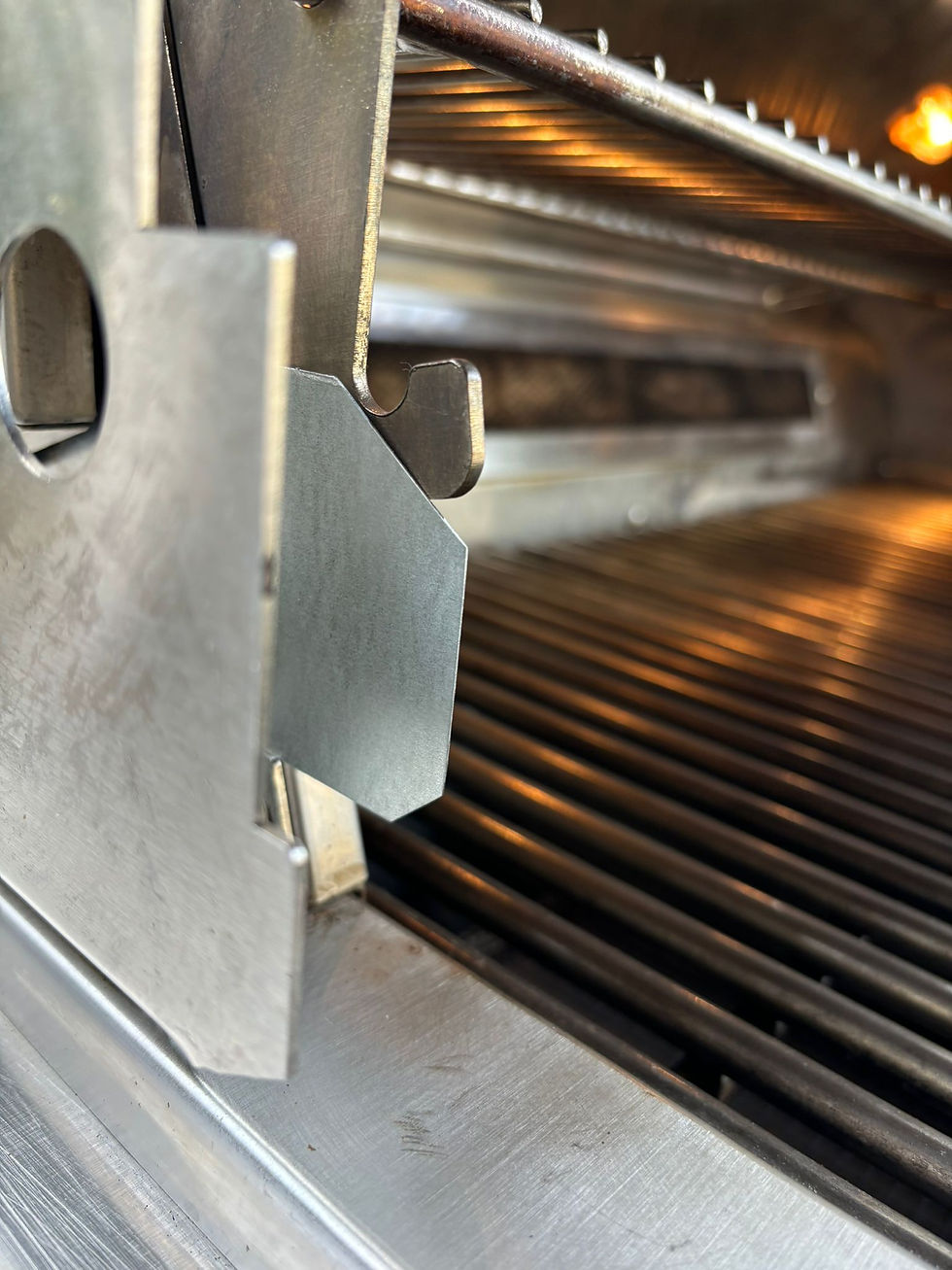
That lingering smell doesn’t just affect the air. It affects your food.
When old grease reheats, it creates smoke filled with carbonized particles. That smoke sticks to whatever you’re cooking.
The result?
Bitter flavor
Overly smoky taste
Food that tastes “dirty”
Black residue sticking to meat or vegetables
You might think it’s your marinade. Or the seasoning. But often, it’s years of buildup burning underneath your food.
The Safety Risk Most Grill Owners Ignore

A burnt smell isn’t just unpleasant. It can be dangerous.
Excess grease buildup is one of the leading causes of grill fires.
When grease accumulates in the firebox or on flavor bars, it can ignite unexpectedly. This leads to flare-ups that:
Burn food instantly
Damage grill components
Crack internal parts
Create dangerous fire hazards
In a dry climate like Los Angeles, outdoor fire safety is especially important. A neglected grill increases risk, particularly during summer gatherings and holiday cookouts.
Why Los Angeles Homeowners Experience This More Often

Living in Los Angeles means year-round grilling weather.
Unlike colder climates where grills sit unused for months, many LA homeowners cook outside weekly. More use means:
Faster grease accumulation
More carbon buildup
Greater risk of flare-ups
More persistent burnt smells
If you grill often, professional grill cleaning isn’t a luxury. It’s maintenance.
How Often Should You Deep Clean Your Grill?
For most homeowners:
Light use (once or twice a month): Deep clean once per year
Moderate use (weekly): Deep clean every 6 months
Heavy use (multiple times per week): Deep clean every 3–4 months
If you’re already noticing a burnt smell that won’t go away, don’t wait.
Signs It’s Time for Professional Grill Cleaning

If you notice any of these, your grill likely needs a deep cleaning service:
Persistent burnt smell
Uneven flames
Flare-ups happening more frequently
Excessive smoke
Food cooking unevenly
Grease dripping excessively
Rust starting to form under buildup
Ignoring these signs shortens the lifespan of your grill.
Why DIY Cleaning Often Doesn’t Fix the Problem
Homeowners often try:
Wire brushes
Store-bought degreasers
Pressure washers
Baking soda mixtures
Vinegar sprays
These can help with light residue.
But they don’t safely remove hardened carbon buildup inside burners and fireboxes. In some cases, aggressive cleaning methods can even damage stainless steel components.
Pressure washing, for example, can push grease deeper into crevices or damage ignition systems.
What Professional Grill Cleaning Actually Includes

A true professional grill cleaning service in Los Angeles typically includes:
Full disassembly of internal components
Detailed scraping of carbon buildup
Deep degreasing of firebox
Cleaning and clearing burner ports
Removing grease from drip systems
Polishing stainless steel surfaces
Reassembly and performance check
The difference in smell, performance, and appearance is immediate.
Many homeowners say their grill looks almost new after a proper deep clean.
How Deep Cleaning Improves Grill Performance
When internal parts are clean:
Flames burn evenly
Food cooks more consistently
Ignition works properly
Less smoke is produced
Fuel efficiency improves
Grill lifespan increases
You’re not just removing odor. You’re restoring performance.
The Cost of Ignoring the Burnt Smell
Replacing grill burners can cost hundreds of dollars. Replacing an entire grill can cost thousands.
Regular professional grill cleaning helps prevent:
Corrosion
Burner failure
Firebox damage
Ignition issues
Premature replacement
Maintenance is always more affordable than replacement.
Why Professional Grill Cleaning in Los Angeles Is Worth It
In a city where outdoor living is part of daily life, your grill should perform like it’s supposed to.
A clean grill means:
Better-tasting food
Safer cooking
More enjoyable gatherings
Less stress before hosting
Instead of worrying about flare-ups or strange odors, you can focus on the food and your guests.
Bring Your Grill Back to Life
If your grill still smells burnt even after cleaning, the problem isn’t on the surface.
It’s deeper.
A professional deep cleaning removes the hidden grease and carbon buildup that basic scrubbing can’t reach.
If you’re in Los Angeles and want your grill restored to proper working condition, consider scheduling a professional service.
A properly cleaned grill doesn’t just smell better.It cooks better, lasts longer, and keeps your backyard gatherings safe.


Comments